
 Posts
Posts





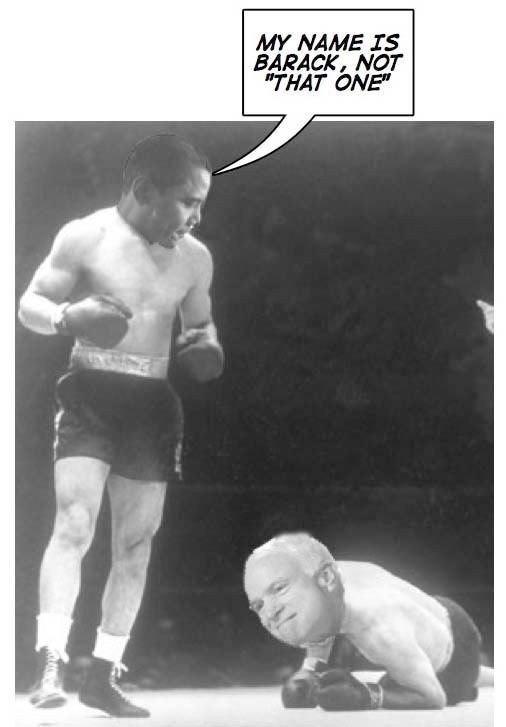
from pseudo-intellectualism on 10/8/08 after McCain referred to Barack as "That One"
I adapted the classic Joe Louis knockout of Max Schmeling photo
Sunday, December 14, 2008
My Name Is Barack Obama
Friday, February 29, 2008
Wednesday, February 27, 2008
Tuesday, February 26, 2008
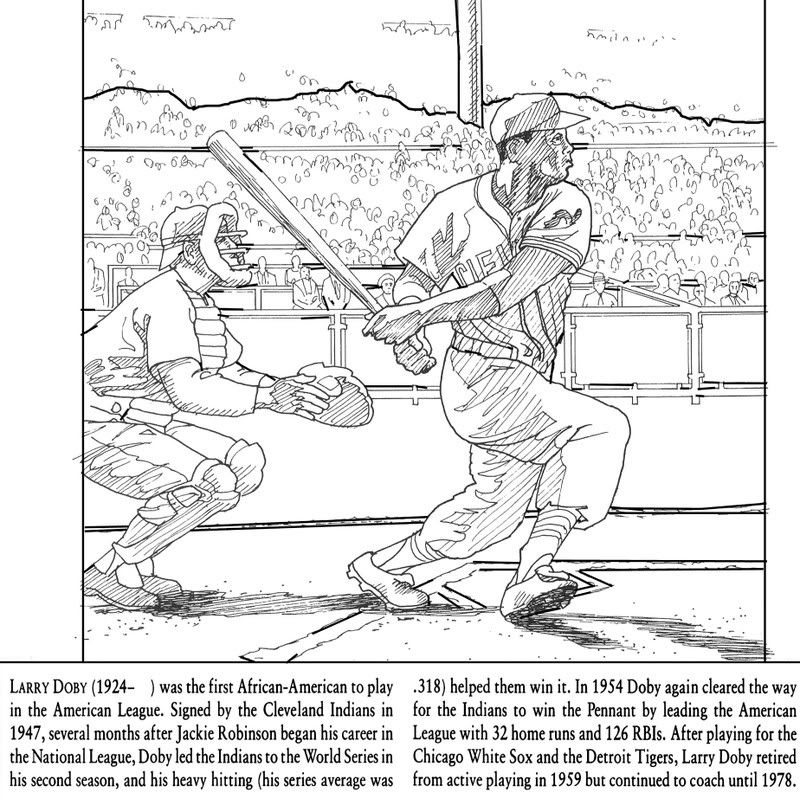
Black History Coloring Pages: Joe Louis And Larry Doby
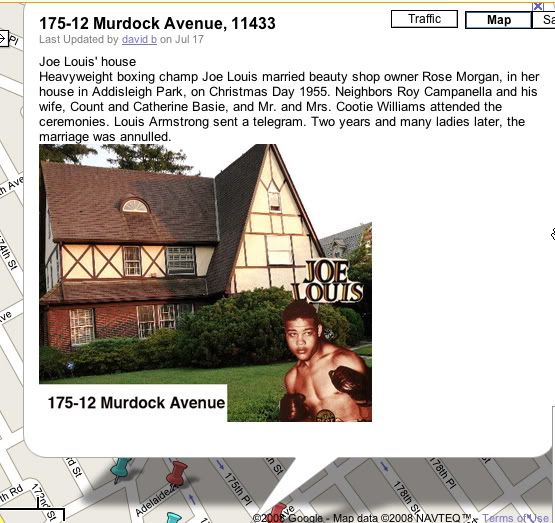
Joe Louis biography from the official Joe Louis site
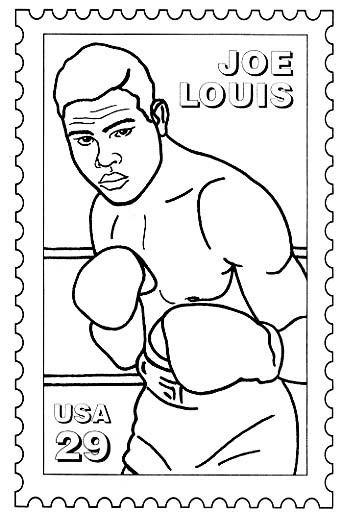
Joe Louis burst onto the professional boxing scene in 1934 with style and skill such as the boxing world has seldom seen. Known to many as the "Brown Bomber," Louis emerged victorious from his first 27 fights, all but four of which he won inknockouts. In the early days of his career, he destroyed such great heavyweight fighters as Stanley Poreda, Natie Brown, and Rosco Toles. It was here that Louis delivered to the entire world a premonition of the reign of domination that he was to begin.
Joe Louis Barrow was born on May 13, 1914. His father, "Mun Barrow," was a cotton picker from Alabama and his family fought with poverty for most of his childhood. His family moved to Detroit in 1924, at which point Joe first became involved in boxing. Having grown up in the Old South, Louis had acquired the instinct and anger of a true fighter, even amidst the evils of racial discrimination and intolerance. His early career was a period of hard work and determination, and was one without glamour or fame. Ten years after his arrival in Detroit, Louis won the Golden Gloves as a light heavyweight. Following this win, Louis turned professional and won twelve contests within the first year. The first few years of Louis' pro career involved a steady ascension up the pyramid of the Heavyweight class. His boxing prowess, as well as his reputation, was growing at an incredible rate. In June of 1935, he fought Primo Carnera, the former heavyweight champion, before a Yankee Stadium crowd of 62,000. Louis followed this fight with a pairing against Max Baer, who he defeated by knockout in the fourth round. Ernest Hemingway described this fight as "the most disgusting public spectacle outside of a public hanging" that he had ever seen.
Joe Louis was seemingly invincible, until his meeting with Max Schmeling on June 19, 1936. Schmeling was the underdog but, to the surprise of all, gave Louis a defeat that would continue to sting long after the cuts had healed. Louis was counted out in the 12th round of this lengthy fight and suffered the first and most painful defeat of his boxing career. In 1937, Louis faced world heavyweight champion James J. Braddock in Chicago. In an eight round match, Louis captured the heavyweight title of the world by knocking Braddock out. After this victory, Louis stated, "I don't want nobody to call me champ until I beat Schmeling." Louis had ascended to the top of the boxing world, but in his estimate his journey was far from complete. His embarrassing loss to Max Schmeling was the only dark spot on a career that otherwise was the stuff of dreams, and he was consumed by a desire for revenge.
Following this successful title defense against Welsh boxer Tommy Farr in a 15-round marathon match, Louis initiated his "Bum of the Month" campaign. The idea was for Louis to take on a variety of fighters, whether they were contenders or not.
During this period, on the day of June 22, 1938, Louis once again took on the only opponent who had ever beaten him, Max Schmeling. This time around, Louis knocked Schmeling out and captured the admiration of countless Americans. Louis gained a moral victory for himself and for his country, and simultaneously struck a damaging blow to Hitler and his pretentious beliefs.
Louis' first punches, a pair of powerful left hooks, began his opponent's eventual demise. Schmeling complained bitterly about being hit with foul kidney punches, but every punch was a fair one. The fight was nothing short of ridiculous, with Schmeling falling to the floor in just two minutes and four seconds.
It was this time period that bore witness to Louis' reign of terror in the heavyweight boxing world. Beginning in 1937, he began a 12-year reign as boxing's heavyweight champion of the world. During this stretch, Louis had victories over Lou Nova, Tony Galento, Gus Dorazio, Buddy Baer, and Johnny Paycheck. Louis' epic battle with Billy Conn at the Polo Grounds also occurred during this time. In 1942, Joe Louis began a period of service in the Army and worked as a physical education teacher. It would be four years before Louis again returned to the ring. Between 1946 and 1949, Louis flawlessly defended his title four times, including two victorious fights against 'Jersey' Joe Walcott.
Louis retired in 1949, still the undefeated heavyweight champ. Succumbing to financial pressures and government debts, Louis was forced back into the ring. In 1950, he attempted to recapture his title in a bout against Ezzard Charles. However, in a points decision, Louis was handed a loss. Not ready to accept defeat, he again tried his hand in 1951 against Rocky Marciano. During this unsuccessful return to the ring, Marciano knocked Louis through the ropes in the 8th round. This was Joe Louis' final time in the ring. He had earned $5 million in his illustrious boxing career. But at 37, Joe Louis had not a single cent to show for it. To support himself, Louis decided to make a living as a Las Vegas casino host.
Joe Louis still holds the distinction of having successfully defended his title more times than any other heavyweight in history. He knocked out five world champions and will remain a powerful part of boxing history for many decades to come. His life and success story serve as proof that black and white Americans can coexist. Joe Louis is a role model for all of us and proved that good sportsmanship can exist even in a sport as violent as boxing. When he died in 1981, Joe Louis was eulogized - and continues to be known - as one of the greatest prizefighters of all time.
Joe Louis: HBO And Everlast Open The Joe Louis Gym In Harlem

from the nytimes of 2/22/08Joe Louis and Harlem, Connecting Again in a Police Athletic League Gym by JOHN ELIGON
It was the evening of June 22, 1938, and nearly everyone in Harlem was doing the same thing. Huddled around radios on their fire escapes and roofs, in their kitchens and living rooms, people were listening to the heavyweight boxing match between Joe Louis and Max Schmeling.
“Harlem was in stereo,” said Representative Charles B. Rangel, who grew up in Harlem and was 8 years old at the time of the fight. “Everyone had on the same station, the same fight. You heard the same screaming and yelling when he was winning, and the same sighs when he got hit.”
Louis once captivated the minds and hearts of New Yorkers, especially those in Harlem’s thriving black community. But as New York’s mantle as boxing’s premier stage ebbed over the past several decades, so too did Louis’s legacy in the city.
On Thursday, HBO and Everlast, a company that specializes in boxing equipment, took a step toward rekindling the memory of Louis in New York City. They opened the Joe Louis Boxing Gym in the basement of the Police Athletic League building on Manhattan Avenue near 119th Street in Harlem.
“I think it’s a wonderful tribute to my father,” Joe Louis Barrow Jr., Louis’s son, said by telephone. “It will continue to keep the Joe Louis connection to New York, and specifically Harlem.”
Though he was born, as Joe Louis Barrow, in Chambers County, Ala., and lived most of his life in Detroit and Chicago, Louis rose to international prominence in New York.
Louis’s first fight in New York was in 1935. His promoter brought him to the city because the owners of Madison Square Garden controlled the heavyweight title and he wanted to get his fighter a shot.
Louis lost his first fight against Schmeling, who was from Germany, at Yankee Stadium in 1936. A year later, he won the heavyweight title for the first time, by knocking out Jim Braddock in Chicago, and returned to New York to defend his title. In 1938 came a highly anticipated rematch against Schmeling.
This fight, also at Yankee Stadium, was billed as the United States versus Nazi Germany. It was a black American, of all people, carrying the torch for a country that was deeply segregated.
Mr. Barrow called his father one of the true pioneers of race relations in the United States, saying that even white Americans cheered for him.
“That was the single event that allowed him to transcend from a heavyweight champion to a true American hero,” Mr. Barrow said of the rematch.
Louis knocked out Schmeling in the first round, and the streets of Harlem erupted. According to an article in The New York Times the day after the fight, people jumped on cars and pushed over traffic signs. The police commissioner ordered officers to reroute traffic on Seventh Avenue between 125th and 145th Streets, saying, “This is their night, let them have their fun.”
People raced to the Hotel Theresa on the corner of 125th Street and Seventh Avenue, now known as Adam Clayton Powell Jr. Boulevard, trying to catch a glimpse of Louis returning from the fight.
“It was madness when the fight was over,” Mr. Rangel said.
Still, The Times reported, there were only 13 minor injuries and most of the celebration, including the one in Yorkville, the German-American quarter around East 86th Street, was peaceful.
Louis, who died in 1981, later said a farewell of sorts to New York. In 1951, he was knocked out by the much younger Rocky Marciano at Madison Square Garden in his final professional bout.
Many of Louis’s accomplishments in New York are captured in the documentary “Joe Louis: America’s Hero ... Betrayed,” which is to be broadcast on HBO on Saturday night.
Today, it is difficult to find a relic of Louis’s time in New York, where he fought more than two dozen times. The area surrounding Madison Square Garden is known as Joe Louis Plaza, as noted on street signs that thousands of New Yorkers probably walk past each day without a glance.
The Police Athletic League building in Harlem now has a plaque at its front entrance that reads, “Home of the Joe Louis Boxing Gym.” Inside hangs a painting of Louis by Duhirwe Rushemeza, a Brooklyn-based artist. The newly renovated boxing gym has fluorescent lighting, walls of bright red and glossy gray brick, a new ring with black canvas and a glass case holding pictures of professional boxers like Mike Tyson, Evander Holyfield and Zab Judah.
Mr. Barrow said his father often reminisced about the time he spent in New York, about the Harlem night life and the people who yearned for just a glimpse of him in the street.
“He loved the energy in New York,” Mr. Barrow said. “He loved Harlem particularly because in those days it was a very hopping town. New York was a place where he really made his career.”
Joe Louis: The Second Max Schmeling Fight, June 22, 1938
Audio and Audio Transcript from the American Experience
Harry Ballow (ring announcer):
This is the feature attraction. Fifteen rounds for the world's heavyweight championship. Weighing 193, wearing purple trunks, outstanding contender for heavyweight honors, the former heavyweight title holder, Max Schmeling. Weighing 198 and three-quarters, wearing black trunks, the famous Detroit Brown Bomber, world heavyweight champion, Joe Louis.
Clem McCarthy:
Joe Louis in his corner, prancing and rubbing his feet in the rosin. Max Schmeling standing calmly getting a last word from Doc Casey. And they're ready with a bell just about to ring. And there we are. And they got to the ring right together with Arthur Donovan stepping around them. And Joe Louis is in the center of the ring, Max going around him. Joe Louis led quick with two straight lefts to the chin. Both of them light, but as the men clinch, Joe Louis tries to get over two hard lefts and
http://www.pbs.org/wgbh/amex/fight/sfeature/sf_radio.html
Max ties him up in the breakaway clean. On the far side of the ring now, Max with his back to the rope. And Louis hooks a left to Max's head quickly and shoots over a hard right to Max's head. Louis, a left to Max's jaw, a right to his head. Max shoots a hard right to Louis. Louis with the old one two. First a left and then the right. He's landed more blows in this one round, then he landed in five rounds of the other fight. And there Max Schmeling caught him with his guard down and got that right hand to Louis' jaw but Louis was going away with a punch at the time. Now Max is backing away against the ropes and Louis is following him and watching for that chance. He is crowding, trailing. Schmeling is not stepping around very much but his face is already marked and they stepped into a fast clinch and at close range Louis fights desperately to bring up a left to the jaw and a right to the body. And coming out of that clinch he got over a hard right and then stabbed Max with a good straight left jab. And Max backed a way and missed a right. Louis then stopped him with two straight lefts to the face and brought over that hard right to the head, high on the temple. And Max [unintelligible] clinch and broke ground. He's back against the ropes now again, not to close to the ropes. And Louis missed with a left swing but in close quarters brought over a hard one to the jaw and again a right to the body, a left hook, a right to the head, a left to the head, a right. Schmeling is going down. But he held to his feet, held to the ropes, looked to his corner in helplessness. And Schmeling is down. Schmeling is down. The count is four. And he's up and Louis, right and left to the head, a left to the jaw, a right to the head, and Donovan is watching carefully. Louis measured him, right to the body, a left up to the jaw, and Schmeling is down. The count is five. Five, six, seven, eight. The men are in the ring. The fight is over -- on a technical knock out. Max Schmeling is beaten in one round. The first time that a world heavyweight championship ever changed hands in one round -- in less than a round.
Subscribe to:
Posts (Atom)


