Wednesday, December 17, 2008

Christmas Night In Harlem


The Armstrong audio combined with images of Harlem from Google images hosted from Life Magazine Three different events are highlighted:

from 1938 scenes from photographer Hansel Mieth, from 1953 a Harlem Globetrotter game photographed by J. R. Eyerman, and from 1945 Adam Clayton Powell Jr.'s marriage to Hazel Scott, photographed by Sam Shere

lyrics (changed from the original racist ones)
Every gal strutting with her beau
Through the streets covered white with snow
Happy smiles everywhere you go
Christmas night in Harlem
People all feeling mighty good
In that good old neighborhood
Here and now be it understood
Christmas night in Harlem
Oh, Everyone is gonna sit up
Until after three
Everyone be all lit up
Like a Christmas tree
Come on now every Jane and Joe
Greet your sweet underneath the mistletoe
With a kiss and a hi-de-ho
Christmas night in Harlem
Instrumental Break
Everyone is gonna sit up
Until after three
Everyone be all lit up
Like a Christmas tree
Come on now every Jane and Joe
Greet your sweet neath the mistletoe
With a kiss and a hi-de-ho
Christmas night in Harlem

Friday, February 29, 2008

Mary Lou Williams And Hamilton Heights


She's playing Roll Em' with the Benny Goodman Band

Hamilton Terrace/Heights


a youtube movie made by a recent resident (megruth) of this beautiful and historic neighborhood in Harlem

My new place in Hamilton Heights. It's pretty awesome to come home to a house and not hear tons of other people slamming their doors at 2am! I love it!
Hamilton Heights is a neighborhood in the New York City borough of Manhattan. It lies between Washington Heights and Morningside Heights; it includes the neighborhood of Sugar Hill, and is itself often considered part of Harlem.[1].
It is bounded by 135th Street to the south, the Hudson River to the west, 155th Street to the north, and Saint Nicholas Avenue/Bradhurst Avenue to the east. The community derives its name from Founding Father Alexander Hamilton, who lived the last two years of his life in the area when it was still largely farmland; specifically, he lived in what is now known as Hamilton Grange National Monument. It is located within Manhattan Community Board 9.
Most of the housing dates from the extension of the Elevated and Subway lines at the end of the 19th and the start of the 20th Centuries[1]. This fairly elegant housing became less desirable to white residents in the 1930s and 1940s as the population changed from white to black, even though the black residents were just as affluent as the white residents.[1]. These are spacious apartment buildings, brownstones and other row houses prominently lining the leafy eastern streets of Hamilton Heights, an area traditionally home to a substantial black professional class. Today the local population is changing again, with Hispanics and Latinos constituting a majority of the population followed by African Americans, Dominicans, West Indians and remainders of earlier time's ethnic whites.
The brownstone revival of the 1960s and 1970s led to a new movement of middle-class blacks in the area. The Latinos arrived in large numbers in the 1980s - with Dominicans making up the majority. Gentrification since 2005 has drastically increased the proportion of non-Hispanic whites, especially Irish-Americans, and Asian residents.
It is the home of the City College of New York (CCNY), Dance Theatre of Harlem, The Harlem School of the Arts, Aaron Davis Hall, a dollar store, Hamilton Palace (a department store), both intended for low income consumers, a Botánica, C Town, bodegas, hair salons and barber shops.
The neighborhood offers several parks, including the very modern Riverbank State Park, around which Riverside Park winds its way to Washington Heights and the historic St. Nicholas Park.
Historic Hamilton Heights comprises the Hamilton Heights Historic District and the Hamilton Heights/Sugar Hill Historic District Extension, both designated by the New York City Landmarks Preservation Commission. One of the highest hills in Hamilton Heights slopes up from the Hudson River at 155th Street, and contains the Trinity Church Cemetery.[1]
The neighborhood is easily accessed via subway, the number 1 line stops at the 137th Street–City College and 145th Street stations. The famous A train on St. Nicholas Avenue provides service at145th Street. The C train services 135th Street, 145 Street and 155th street and Saint Nicholas Avenue.
The MTA-New York City Transit bus lines M4 and M5 serve Broadway, M100 and M101 run on Amsterdam Avenue, M18 on Convent Avenue; M11 on 135th Street; Bx19 on 145th Street; Bx6 on 155th Street and the M3 on St. Nicholas Avenue.

Thursday, February 28, 2008

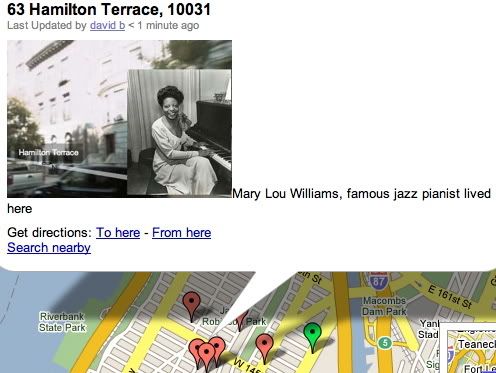
Google Maps: Mary Lou Williams


from my google map of harlem
Williams' 63 Hamilton Terrace apartment was famous in the mid-1940s as a salon where she imparted her knowledge of the jazz tradition to cutting-edge musicians.
from Rutgers' biographical site on Mary Lou Williams

"I'm the only living musician that has played all the eras," Mary Lou Williams confidently advised Marian McPartland in the debut 20 years ago of McPartland's acclaimed radio broadcast, Piano Jazz. "Other musicians lived through the eras and they never changed their styles."
She was right. Jazz fans and historians long ago concluded that Mary Lou Williams was the most important female jazz musician to emerge in the first three decades of jazz. William's multidimensional talents as an instrumentalist, arranger, and composer made her a star from her earliest days and, over the long haul, an equal to any musician successful in those endeavors. Her longevity as a top-flight jazz artist was extended because of her penchant for adapting to and influencing stylistic changes in the music.
In his autobiography, Music Is My Mistress, Duke Ellington wrote, "Mary Lou Williams is perpetually contemporary. Her writing and performing have always been a little ahead throughout her career. Her music retains, and maintains, a standard of quality that is timeless. She is like soul on soul."
Indeed, this process of constant reassessment and renewal she applied to her art is but one of the qualities that makes Williams (1910-81) a truly unique figure in the history of jazz. William's range of talents, summed up by what Ellington termed "beyond category," suggests both the richness and the ambiguity that have made assessing her role in jazz history challenging. Through the Williams Collection, researchers can, for the first time, more fully evaluate a pianist who was simultaneously a master of blues, boogie woogie, stride, swing, and be-bop. Her work as a composer and arranger for Andy Kirk's Twelve Clouds of Joy in the early 1930s reveals one of the earliest examples of a woman given due respect from her peers for her musicianship. William's career opens a window into the critically important Kansas City jazz scene that produced such giants as Count Basie, Lester Young, and Charlie Parker. Her stature in the jazz world is a natural attraction for scholars examining the lives not only of women jazz musicians, but also of twentieth-century African-American women and American history in a larger context.
Born Mary Elfrieda Scruggs on May 8, 1910, in Atlanta, Williams grew up in Pittsburgh, where her prodigious talents led to work as a hardscrabble professional traveling musician while still in her early teens. She came to prominence in the early 1930s with Kirk's Twelve Clouds of Joy, a leading southwestern territory swing band. Williams was not only the band's star soloist but also its chief arranger. Beyond the normal obstacles confronting African-Americans in that pre-civil rights era, she also had to contend with a musical milieu in which women instrumentalists were rare and women arranger/composers virtually non-existent. Billed as "The Lady Who Swings the Band," William's playing and writing were on a par with any of her more famous contemporaries. "Outside of Duke Ellington and Billy Strayhorn, there's no other composer she has to take a back seat to," David Berger, professor at Manhattan School of Music, told The Washington Post recently. In addition to her work for Andy Kirk, she composed and arranged for leading orchestras of the swing era: Duke Ellington, Cab Calloway, and Benny Goodman. These musical manuscripts are part of the Collection.
With her departure from the Kirk band in 1942, Williams settled in New York, where she opened her Harlem apartment to all types of musicians and was particularly encouraging to the experimentation of the young modernists. She helped to inspire and adapted to the revolutionary new style known as be-bop, which reduced many of her contemporaries to anachronisms, and also mentored many of the movement's founders, including Thelonious Monk, Bud Powell, Dizzy Gillespie, and Charlie Parker. (She crossed similar stylistic frontiers in 1977 when she performed a Carnegie Hall concert of duets with the avant-garde pianist Cecil Taylor.)
Her writing also continued to grow; along with Duke Ellington, she was a pioneer among jazz composers in producing extended works, such as the Zodiac Suite. In 1945, she debuted segments of the Suite on her weekly radio broadcast, Mary Lou Williams Piano Workshop, and performed three movements with the 70-piece New York Pops Orchestra during the June 1946 Carnegie Hall Pops Series. William's tours of England in 1952 and France in 1952, both widely covered in the European jazz press, place her in the tradition of Armstrong and Ellington two decades earlier in spreading jazz on the Continent.
In 1956, Williams underwent a spiritual conversion to Catholicism and gave up playing to concentrate on spiritual matters until reemerging in 1957 with a performance alongside Dizzy Gillespie at the Newport Jazz Festival. Compared to her rigorous schedule of touring over the previous 30 years, she played only sporadically over the next decade. She formed the Bel Canto Foundation to assist drug- and alcohol-dependent musicians in 1958. This initiative prefigured her founding of Cecilia Music, a publishing firm to release her compositions, and the establishment of Mary Records to issue her and other selected artists' recordings. Both of these events occurred in the early 1960s, when she also issued one of her later noteworthy recordings, the 1963 Mary Lou Williams Presents St. Martin de Porres.
Williams undertook several ambitious extended works during this period, including her 1971 composition Mary Lou's Mass, which was choreographed by Alvin Ailey and, in 1975, was performed during celebration of a Mass at St. Patrick's Cathedral. In 1977, her career undertook yet another significant turn. Duke University formalized William's role as an educator by appointing her as artist-in-residence, a position she held until her death in 1981. Duke permanently honored William's contributions by opening the Mary Lou Williams Center for Black Culture in September 1983 with an address by Nobel Prize winning author Toni Morrison.

Happy Mother's Day

from 5/16/06 from pseudo-intellectualism

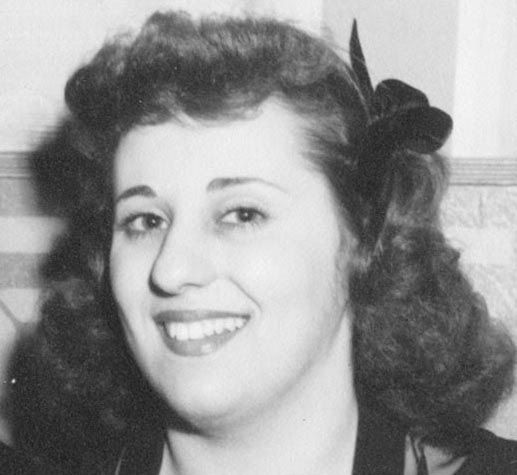
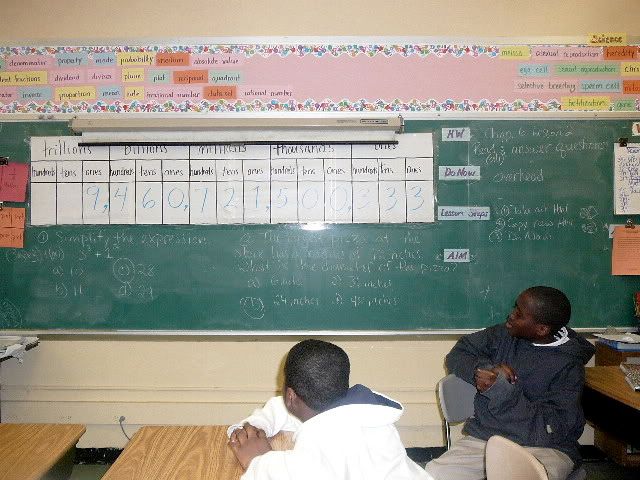
That's my mother, Eva, circa 1945. Quite a beauty. There's nothing like a mother for providing unconditional love, an element that's in very short supply. Mrs. Watson is a great mother to her 5th graders and a real treat to work with. Smart, black and proud and politically astute. She still calls me "Sir." Her kids participated in Peace By Peace festival sponsored by Columbia University.Here they are in a slide show with pics from the festival and here's a "podcast" of our first installment of our "Dave At Night" project.

The Hebrew Home For Boys

from 5/8/06 from pseudo-intellectualism

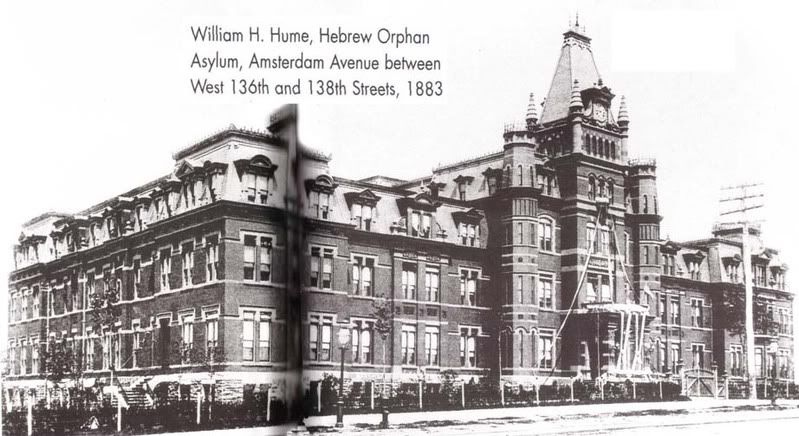
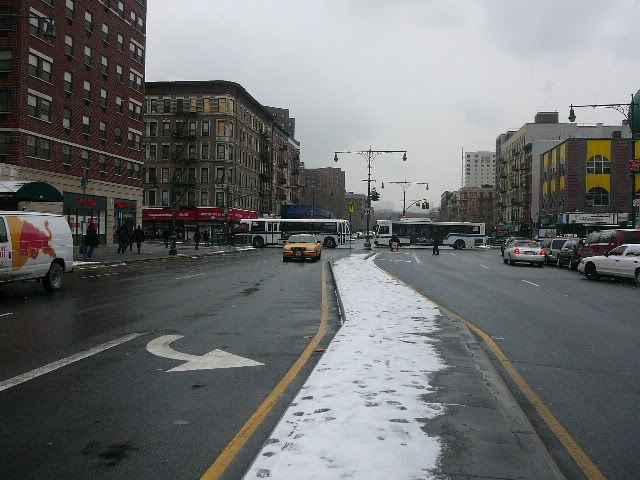
When Dave Caros' father dies in "Dave At Night" he is sent to live at the Hebrew Home For Boys in Harlem. This institution existed on 136th Street, between Broadway and Amsterdam until the 1930's. I couldn't find any pictures of it online. I wanted to get some images of the area to show the classes involved in the les/harlem project that I envisioned. I decided to combine some atmospheric sound with the images, but came up a bit short. So in this slide show I augmented that soundtrack with some reggaetone music. I hadn't been in that area much (CCNY takes up a big part) in my life, other some PS 397K era trips to 142nd Street and Hamilton Place (The Children's Art Carnival). The Convent and Edgecombe Ave areas were beautiful. I had thought that the latin area of west Harlem started further uptown than the 130's. The dividing line between latin and African-American Harlem seemed to be CCNY and St Nicholas Park. Amazingly, the exact location of the Home was discovered when I was researching the Jacob Schiff School, which is unique in that you have to climb a hill to reach it from its 136th Street side. Here's what I found on the nycparks dept site:"This parkland, which is shared by Public School 192, also known as Jacob H. Schiff School, was once home to the Hebrew Orphan Asylum. By World War II, the orphan asylum closed and was transformed into army barracks. Shortly after the war, City College acquired the building for use as a classroom and dormitory, naming it “Army Hall.” The building eventually closed in 1952 and was demolished when Parks and the Board of Education jointly acquired the land in 1956. In 1987, the Schiff School playground received a $918,623 renovation and was officially named Jacob H. Schiff Playground

LES Harlem Connection

from 5/6/06 from pseudo-intellectualism

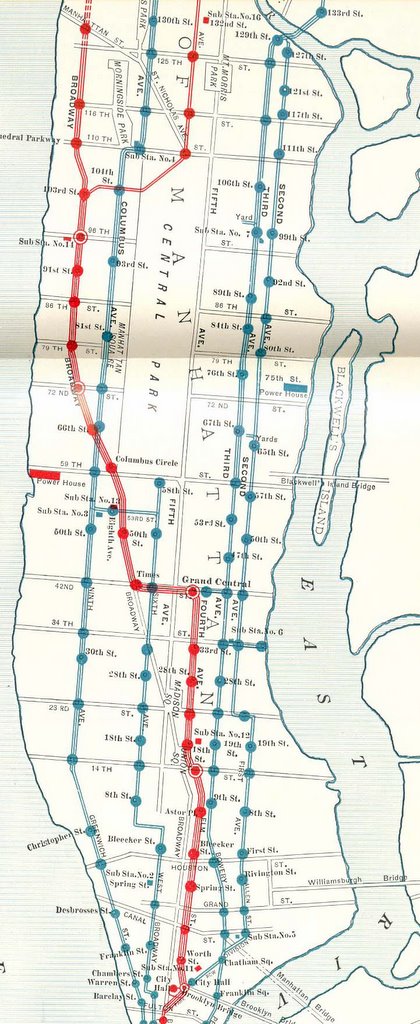
Here I'll try to explain the synchronicity referred to before. I'll begin working up in Harlem in a little while. I've been planning a Harlem Renaissance unit. In looking for children's literature to support this topic I discovered, "Dave At Night." I found it amazing that Dave's story closely paralled my own family history. Dave Karos' father came from Greece, he was a Sephardic Jew. So did my grandfather, who was named David Belelis. Dave Karos' family came from Salonika, my grandfather came from neighboring Janina. The main reason for immigration was the same-a war over control of the territory between Turkey and Greece. Dave Karos' father died in a fall in building accident. My grandfather died almost the same way in an elevator collapse. Dave was left fatherless at 8, My own father was left fatherless at 10. Dave went to an orphanage. My father didn't, but my aunt on my mother's side did when my mother's father died father in 1926 (the same year that Dave's father dies). Pretty spooky, isn't it? I'm "migrating" my work location from the LES to Harlem as Dave is migrated his life. The experience of the early immigrants to the LES at the turn of the last century is that once they were able to secure some economic stability for themselves they moved to a better neighborhood, Harlem. Why Harlem? Ease of transportation, IRT Elevated Lines connected the areas. Many people continued to work on the LES, but lived in Harlem. Wouldn't it be great to get the Harlem School I'll be working in do a joint immigration/migration project with some kids from PS42? They can even read Dave At Night together digitally. They can visit each other's neighborhood and do walking tours. On Friday,after a year and a half, I visited principal Rosa O'Day again and explained my plan and she loved it. I love her. The map attached is a 1904 subway and trolley map. Click on it to expand it. The trolley lines are in blue.

Harlem's Orphan Asylums


the setting for Dave At Night. The writer Art Buchwald was a resident of this Asylum.
In addition, back in 1920 the site was once considered to be the location for the first Yankee Stadium.
from A HISTORICAL TOUR OF THE GREATEST STREET IN THE WORLD.......BROADWAY
FROM NINETY-SIXTH STREET TO ONE HUNDRED AND SIXTY-EIGHTH STREET
CHARITABLE SOCIETIES LOCATED IN THE AREA OF BROADWAY.

Attracted by the salubrity and healthfulness of Washington Heights,
several charitable societies located among the country estates, on or near
the old road or upon Broadway.

A) THE SHELTERING ARMS
It was organized in 1864 for homeless children between five and twelve years
of age for whom no other institution provides, is at Amsterdam Avenue and
One Hundred and Twenty-ninth Street.

B) THE HEBREW ORPHAN SOCIETY
It was founded in 1822, is on the same avenue at One Hundred and
Thirty-sixth Street.

C) THE MONTEFIORE HOME
At Broadway and One Hundred and Thirty-eighth Street is one of the grandest
charities in the city, the Hospital and Home for Chronic Invalids, commonly
called the "Montefiore Home." It was founded in 1884 and is supported
almost entirely by the voluntary subscriptions from people of the Jewish
faith, as a memorial to the famous philanthropist, Sir Moses Montefiore; it
is open to both sexes without distinction of race or creed. The present
quarters have been found to be too cramped to carry out fully the desires of
the trustees, and arrangements are already completed to transfer the Home to
the Borough of The Bronx on the Gunhill Road near Jerome Avenue. The new
buildings are to cost $1,500,000, and will be designed to accommodate six
hundred invalids, with all modern improvements for their comfort and health.

D) THE COLORED ORPHAN ASYLUM
It was organized in 1837, was for many years at Amsterdam Avenue and One
Hundred and Forty-third Street until its removal to Mount St. Vincent. At
the time of the draft riots of July, 1863, the asylum was located at Fifth
Avenue between Forty-third and Forty-fourth streets. The malice of the
rioting crowds was directed against every one who showed color, whether
man, woman, or child, and many negroes were hanged from near-by lamp-posts.
Inspired by this hatred, the mob made an attack upon the asylum and fired
the buildings, which were consumed; but fortunately, the children were
withdrawn safely through a rear entrance. With the money obtained as damages
from the city, that secured from the sale of the Fifth Avenue plot, and that
subscribed by citizens, many of whom had never heard of the institution
until the burning of the asylum, the new buildings were started on
Washington Heights.

Dave At Night

from 1/13/06 from pseudo-intellectualism

The main character of this book attends PS42 on Hester Street. Here's a portion of the review: "In Dave at Night, Newbery Honor award– winning author Gail Carson Levine brilliantly describes in gritty detail an orphan’s journey from loss to fulfillment. Fans of her previous novel, Ella Enchanted, might be surprised at Gail Carson Levine's departure from the world of fantasy with her realistic new book, Dave at Night. Inspired by Ms. Levine's father's experience in the Hebrew Orphan Asylum in New York, this is the story of eleven-year-old Dave Caros. The year is 1926. Dave’s beloved father is dead, and his stepmother doesn’t want him. Only the HHB will take him in. Hebrew Home for Boys, aka Hell Hole for Brats. Dave is tough, a troublemaker. He can take care of himself. If he doesn’t like the Home, he’ll run away and find a better place. Only it’s not that simple. . . .This stunning new novel by Newbery Honor award–winning author Gail Carson Levine takes Dave from the poverty of the Lower East Side of New York City to the misery of the Hebrew Home for Boys to the hope and magic of Harlem during the Harlem Renaissance. It tells a tale of terrible loss and hard-won gains, of cruel relations and kind strangers, of great poverty and great wealth. Most of all, though, it tells a tale about the power of friendship." Here's the first few chapters as a slide show. I'm on my way to whole book. What's great about this book is that it has an audio version. Here's a segment as an mp3.

Panoramic Movie Of Amsterdam Ave And 137th-138th Street

A panoramic scene connecting (look for the hot spots) the middle of the CCNY campus to (West) Amsterdam Avenue, between 137th and 138th Street. The public school park was once the site of the Hebrew Home for the Boys. It was that home that played an integral part in Gail Carson Levine's wonderful kids' historical fiction book called "Dave At Night."

Panoramic Movie Of CCNY


A panoramic movie taken at CCNY

Panoramic Movie Of Marcus Garvey Park 1


A panoramic movie taken from high up in Marcus Garvey Park (formerly Mount Morris Park, 119th Street-124th Street, 5th Avenue)

Wednesday, February 27, 2008

119th Street Today


from 4/17/06 from pseudo-intellectualism
I did some neighborhood exploring to find what that Double V site on119th Street looks like today. I wonder whether any of those people in the 64 year old photo are still there. I'm nuts enough to start knocking on doors to find out. Here's a link to an enlarged version of that image with some out-takes.

The Double V For Victory


from 4/17/06 from
pseudo-intellectualism
One of the many things I learned in reading Striver's Row was the pressure to end some of the humiliations of segregation while Black America's was enlisted to defeat fascism abroad. I was aware of the struggles of the Tuskegee Airmen, but that was tame compared to some of the actual incidents of race wars in southern bootcamps. Above is a picture taken in 1942 on 119th Street. I found at the inmotionaame site Here is a link to a larger image of that site with more background information

Panoramic Movie Of 119 St. Between Malcolm X Blvd And Adam Clayton Powell Jr. Blvd


A panoramic movie taken on 119th Street between Malcolm X Boulevard and Adam Clayton Powell Jr. Boulevard. The site of an historic photo taken in 1941

Panoramic Movie Of 119 St. And Malcolm X Boulevard


A panoramic movie taken from the meridian of 119th Street and Malcolm X Boulevard

Panoramic Scene 1: 117th And Malcolm X Blvd To Mr. Wright's Class


A panoramic movie taken from the meridian of 117th Street and Malcolm X Boulevard


from 3/18/07 from pseudo-intellectualism Updated since I have embedded the panoramic movie above (only one of the ones that make up the panoramic scene which is linked below).It also doesn't have the zoom features. I haven't learned how to code that yet.
I had to learn how to do panoramas in order to make good on #27 in the now Top 30:
"27. Making quicktime VR movies ( a relatively easy and low tech, low cost, low data task) with kids to show off their communities." I used to use QuickTime VR for OS9, in OSX I'm using VR Worx. Above is a screen shot of the 117th Pan which in the Panoramic Scene links to Mr. Wright's 6th Grade Class. The hot spot is approximately where the room is located. The hot spot back to 117th Street is also in approximately the correct spot. Here is the link to the movie.Below is a screen shot of Mr. Wright's room

A Visit With The Great Filmmaker Bill Miles


from 7/5/06 from pseudo-intellectualism this time the video is above as well as linked (a bigger, clearer version)

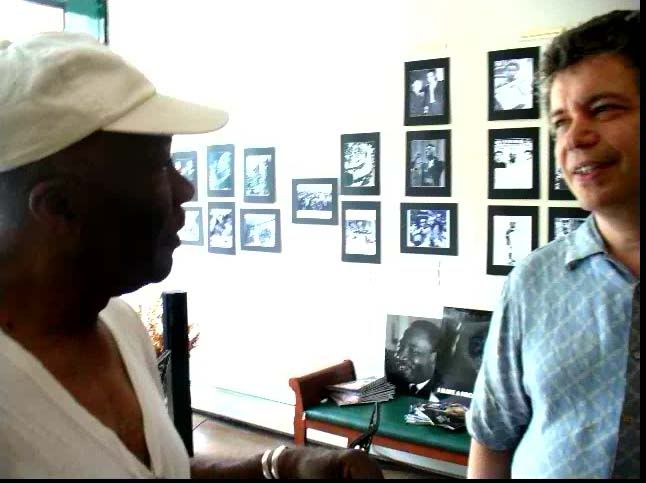
Obviously Marty needs to get out into the world more, almost as much as I do. So I brought Marty and his designer shirt collection to meet the famous filmmaker Bill Miles up on 116th Street at Harlem Heritage Tours. See and listen to the electrifying results.After viewing, the gifted wordsmith Marty declared the event, "A humanistic experience sprinkled with musical sunshine."

Tuesday, February 26, 2008

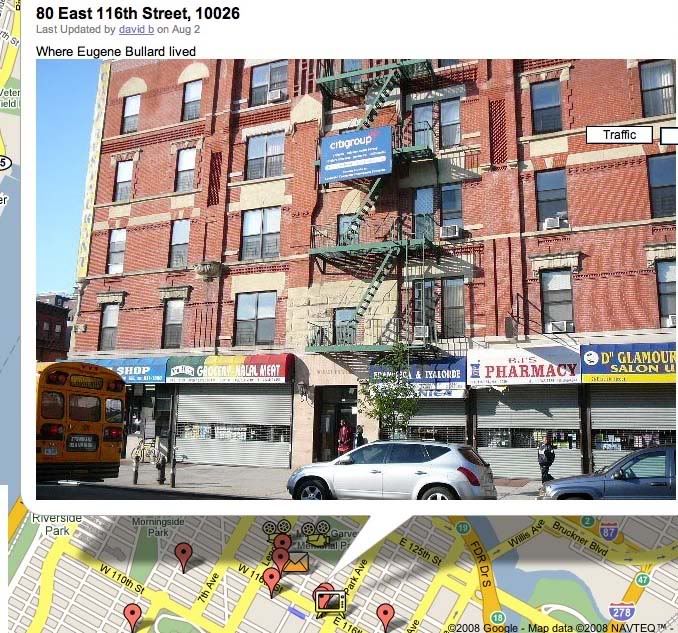
Google Maps: Eugene Bullard


from my google map of harlem

Google Maps: Sugar Ray Robinson


from my google map of harlem

blogger templates | Make Money Online