Thursday, February 28, 2008

Happy Mother's Day

from 5/16/06 from pseudo-intellectualism

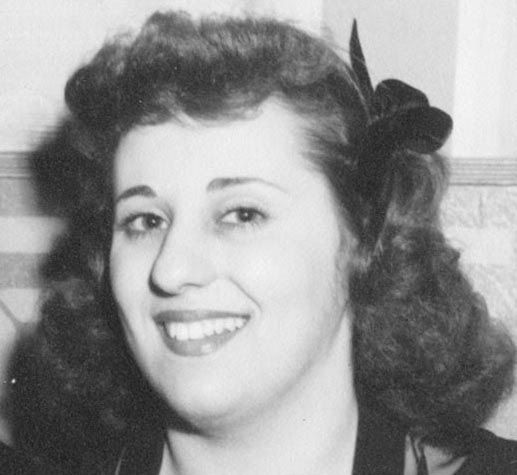
That's my mother, Eva, circa 1945. Quite a beauty. There's nothing like a mother for providing unconditional love, an element that's in very short supply. Mrs. Watson is a great mother to her 5th graders and a real treat to work with. Smart, black and proud and politically astute. She still calls me "Sir." Her kids participated in Peace By Peace festival sponsored by Columbia University.Here they are in a slide show with pics from the festival and here's a "podcast" of our first installment of our "Dave At Night" project.

The Hebrew Home For Boys

from 5/8/06 from pseudo-intellectualism

When Dave Caros' father dies in "Dave At Night" he is sent to live at the Hebrew Home For Boys in Harlem. This institution existed on 136th Street, between Broadway and Amsterdam until the 1930's. I couldn't find any pictures of it online. I wanted to get some images of the area to show the classes involved in the les/harlem project that I envisioned. I decided to combine some atmospheric sound with the images, but came up a bit short. So in this slide show I augmented that soundtrack with some reggaetone music. I hadn't been in that area much (CCNY takes up a big part) in my life, other some PS 397K era trips to 142nd Street and Hamilton Place (The Children's Art Carnival). The Convent and Edgecombe Ave areas were beautiful. I had thought that the latin area of west Harlem started further uptown than the 130's. The dividing line between latin and African-American Harlem seemed to be CCNY and St Nicholas Park. Amazingly, the exact location of the Home was discovered when I was researching the Jacob Schiff School, which is unique in that you have to climb a hill to reach it from its 136th Street side. Here's what I found on the nycparks dept site:"This parkland, which is shared by Public School 192, also known as Jacob H. Schiff School, was once home to the Hebrew Orphan Asylum. By World War II, the orphan asylum closed and was transformed into army barracks. Shortly after the war, City College acquired the building for use as a classroom and dormitory, naming it “Army Hall.” The building eventually closed in 1952 and was demolished when Parks and the Board of Education jointly acquired the land in 1956. In 1987, the Schiff School playground received a $918,623 renovation and was officially named Jacob H. Schiff Playground

LES Harlem Connection

from 5/6/06 from pseudo-intellectualism

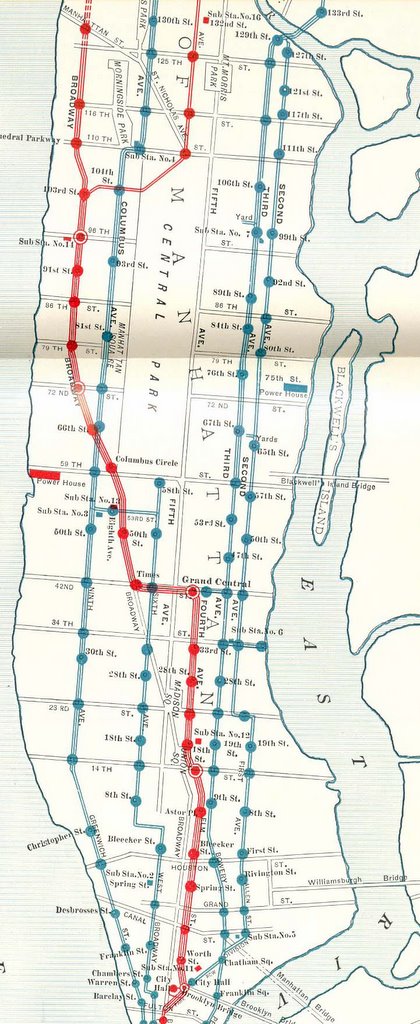
Here I'll try to explain the synchronicity referred to before. I'll begin working up in Harlem in a little while. I've been planning a Harlem Renaissance unit. In looking for children's literature to support this topic I discovered, "Dave At Night." I found it amazing that Dave's story closely paralled my own family history. Dave Karos' father came from Greece, he was a Sephardic Jew. So did my grandfather, who was named David Belelis. Dave Karos' family came from Salonika, my grandfather came from neighboring Janina. The main reason for immigration was the same-a war over control of the territory between Turkey and Greece. Dave Karos' father died in a fall in building accident. My grandfather died almost the same way in an elevator collapse. Dave was left fatherless at 8, My own father was left fatherless at 10. Dave went to an orphanage. My father didn't, but my aunt on my mother's side did when my mother's father died father in 1926 (the same year that Dave's father dies). Pretty spooky, isn't it? I'm "migrating" my work location from the LES to Harlem as Dave is migrated his life. The experience of the early immigrants to the LES at the turn of the last century is that once they were able to secure some economic stability for themselves they moved to a better neighborhood, Harlem. Why Harlem? Ease of transportation, IRT Elevated Lines connected the areas. Many people continued to work on the LES, but lived in Harlem. Wouldn't it be great to get the Harlem School I'll be working in do a joint immigration/migration project with some kids from PS42? They can even read Dave At Night together digitally. They can visit each other's neighborhood and do walking tours. On Friday,after a year and a half, I visited principal Rosa O'Day again and explained my plan and she loved it. I love her. The map attached is a 1904 subway and trolley map. Click on it to expand it. The trolley lines are in blue.

Walking My Baby Back Home


The previous post about the movie "Boycott" and its use of Nat King Cole's song reminded me of this:from 5/16/06 from pseudo-intellectualism but with google video version above, and a larger, more visible one still linked

On one of Dave Caros' escapades in 1920 Harlem took him to the home of D'Lelia Walker ( Odelia Packer in the book, "Dave At Night").The map shows how far he ventured. Actually in the book, Odelia's chauffeur drove Dave and his fake Grandpa Solly there. Dave was in love with Odelia's daughter, Irma Lee. While at the mansion he met the great Harlem Renaissance artist Aaron Douglas. This was an inspiration for Dave's budding art career. In life imitating "art", Gail Carson Levine's father would later become a successful commercial artist and Gail and her sister have artistic skills as well. Here's a slide show I put together about the Walker's with selected images from a great resource, the book "Harlem Lost and Found." The music is Noble Sissle's 1920 era "Camp Meeting Blues." Here's part of an interview that D'lelia's great grandaughter, A'lelia Bundles, did with with Jerry jazz on this site: JJM: As an introduction to Madam C.J. Walker -- your great great grandmother -- the writer Ishmael Reed wrote, "Madam Walker is the key to understanding her generation. She had to battle the society who had consigned her to doing its laundry, yet she triumphed to become one of the most fabulous African American figures of the twentieth century." Madam Walker, born Sarah Breedlove, was orphaned at a very early age. What characteristics did she possess that allowed her to turn her vulnerability as an orphan into resolve and resilience? AB: One explanation is that she was a genius. In every generation there are geniuses like Henry Ford or Bill Gates or Andrew Carnegie, so let's use that characterization as the headline. In addition, she was a very resilient child. There are many children of poverty who overcome very difficult circumstances, and in a family where everyone doesn't succeed, sometimes there are children who possess the resilience necessary to turn the difficulties into positives. Because she had so much loss in the early part of her life -- including the death of her parents -- rather than being beaten down by it, it made her a fighter."

blogger templates | Make Money Online