Saturday, February 5, 2011

Black Baseball’s Rich Legacy

black-baseball-times
an excerpt from a 2008 nytimes article by Kevin Coyne

ON a fine September night in 1946, in a ballpark out on the marshy edge of Newark’s East Ward, the Newark Eagles — one of the two professional baseball teams, one black and one white, that shared Ruppert Stadium — trotted onto the field in jerseys so new and bright they looked almost incandescent under the lights.
The players were black, the uniforms white. The team’s co-owner, Effa Manley, had just spent $700 on a new set, about as much as she paid her best players each month. It was the Eagles’ first time in the Negro World Series, and she wanted them to look the part of champions.
The stands were packed with both dignitaries and ordinary fans, black and white alike, and the field was dense with players on their way to the National Baseball Hall of Fame: Monte Irvin, Larry Doby, Leon Day and Manager Biz Mackey for the Eagles; Satchel Paige, Hilton Smith and Willard Brown for the Kansas City Monarchs. Conspicuously missing was the Monarchs’ shortstop from the previous season, Jackie Robinson, who was playing for the Brooklyn Dodgers’ farm club in Montreal, and was on the verge of rendering moot this whole segregated enterprise.
Sitting in the stands was an old ballplayer, creeping up on 90, who lived at the Y.M.C.A. in nearby Orange, N.J., Ben Holmes. He had brought along a treasure from the earliest days of black baseball: a silver ball awarded in 1888 to the team he played third base for, the Cuban Giants, the first full-time professional black baseball team, when they won an earlier version of the black championship. The heavyweight champion Joe Louis threw out the silver ball to start the game, the opener of the World Series.
“The ’46 series, that’s really the crème de la crème,” said Lawrence D. Hogan, a history professor at Union County College, in Cranford, N.J., and the author of a definitive book on black baseball, “Shades of Glory: The Negro Leagues and the Story of African-American Baseball” (National Geographic, 2006). He has trolled through old records and memorabilia for decades, but Holmes’s silver ball has remained elusive, as if it — like the Negro leagues themselves — disappeared from the earth soon after that series.
“There’s never been any sighting of that ball,” Dr. Hogan said. “It’s the holy grail of black baseball.”
Baseball is thriving today on the outskirts of New York, with a crop of minor-league teams and bustling new stadiums that grew quickly over the last decade or so. But these new teams were planted in fertile ground, inheritors of a rich regional tradition of black baseball — of an era when an archipelago of green diamonds stretched from Bacharach Park in Atlantic City to the Argyle Hotel in Babylon on Long Island to Bulkeley Stadium in Hartford. That was a time when much of America still believed that blacks and whites shouldn’t be neighbors or schoolmates, co-workers or teammates.
Frank Grant: Breaking The Barrier Before Robinson

an excerpt from a 2006 nytimes article by Bill Pennington
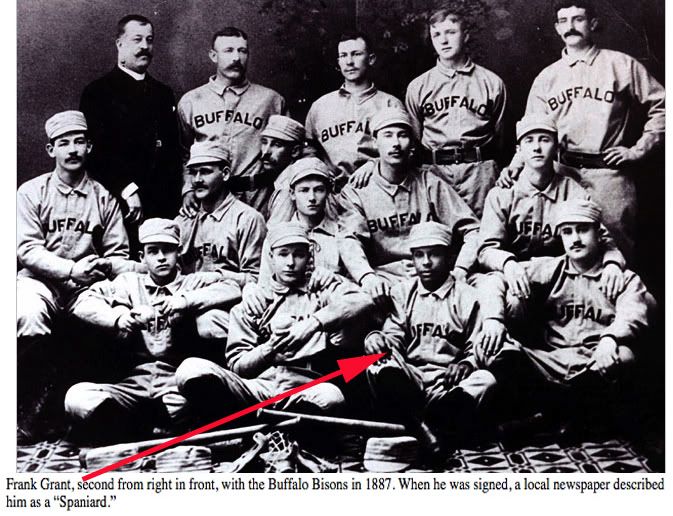
In 1886, the Buffalo Bisons, a top minor league baseball team, signed a versatile infielder from Massachusetts named Frank Grant. The next day, a local newspaper announced Grant’s arrival by describing him as “a Spaniard.”
Grant was in fact one of five African-Americans playing in the otherwise all-white minor leagues that year, on teams from Kansas to Connecticut. Their presence was accepted if not widely acknowledged in the 1880’s, passed off with a wink and a nod, a dodge that labeled players like Grant as Spaniards, Portuguese or Arabs.
The ruse did not hide what historians now concede, that some 60 years before Jackie Robinson famously broke organized baseball’s color barrier, integrated teams of white and black athletes played hundreds of professional games. African-Americans even played in the major leagues.
To most Americans, the history of black baseball means the Negro leagues, an enterprising, culturally rich response to the Jim Crow-era segregation in professional baseball. But blacks played professional baseball for decades after the Civil War, long before the Negro National League began in 1920.
On Sunday in Cooperstown, N.Y., the National Baseball Hall of Fame and Museum will induct by special election 17 stars and team owners who predate modern professional baseball’s integration in the mid-1940’s.
Two of the special inductees, Grant and a onetime teammate, Sol White, trace their baseball lives to the most obscure period of black baseball — the 1880’s, the last decade before the game imposed its color barrier.
The recently documented life stories of Grant and White, 19th-century pioneers who dared not be recognized as such, have helped complete the chronicle of the African-American baseball experience. Theirs are the forgotten tales of men rushing to play at the highest professional tier, aware that their immediate offspring would probably be prohibited such an opportunity.
“They are the players who just vanished from baseball’s narrative, like a secret no one talks about,” said the baseball historian Jim Overmyer, who specializes in black baseball. “But it is important to know that they are the beginning of baseball desegregation. Somebody had to do the early heavy lifting, and even if few people know it, these guys were there first.”
Overmyer and another historian of black baseball, Greg Bond, were among 12 members of a committee that voted for the Hall of Fame’s special election.
“It complicates our understanding of race relations in sports to realize that the color barrier was not a natural outcome of mixing races after the Civil War,” Bond said. “The fact is there were a lot of blacks on mostly white teams. The color barrier became a choice people made at the expense of people like Grant and White, who then disappeared.”
The first black professional baseball player is believed to be John Fowler, who used the nickname Bud and played for minor league teams in Lynn and Worcester, Mass., in 1878. Through recommendations from fans, historians and Hall of Fame members, Fowler was among 94 candidates for the special election, but he was not among the final 17.
Through meticulous work, representatives for the Society for American Baseball Research discovered that Fowler was born John Jackson 20 years earlier in central New York, and that he learned to play baseball, in of all places, the village of Cooperstown during the 1860’s.
Fowler played for 18 years in 13 professional leagues, from New England to New Mexico. He was a speedy base stealer who played every position, including pitcher..

Friday, February 4, 2011

The History Of The Negro Leagues: The Cuban Giants and The Argyle Hotel

argyle-hotel
from clydes guide

Legends Of The Negro Leagues: Striking Out Jim Crow

from the legends of the negro leagues

Thursday, February 3, 2011

Edward Strickland

originally from knickerbocker village in December of 2007
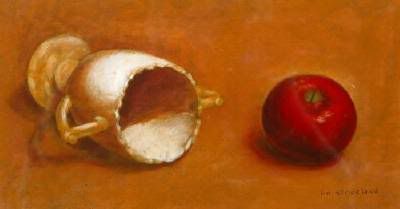
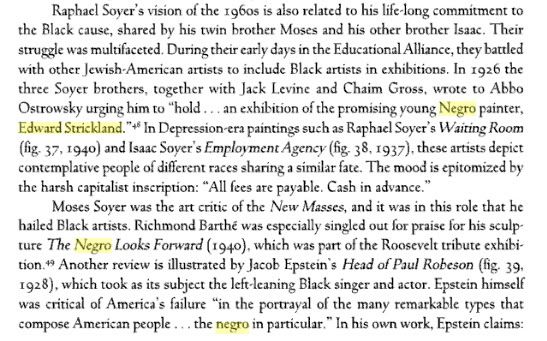
I don't know how long Edward Strickland lived in Knickerbocker before he was evicted (I'm assuming he was), but he seems to have a been an artist of note as referenced here in an article about famed artist Raphael Soyer. I found an exampe of his work, a still life on-line. I'm still looking for more information on him. He's mentioned in this book, Mutual Reflections: Jews and Blacks in American Art
By Milly Heyd.
I wonder whether Soyer or his twin brother Moses ever lived in Knickerbocker? It mentions that Raphael displayed his work at the Educational Alliance.
from Strickland's obituary

Bay State Banner
09-24-1998
Edward Strickland, 68, educator, artist, writer
Edward Strickland, professor of the psychology of visual arts, a friend to artists, and himself an artist and writer, died in the early morning of Sept. 16 at Deaconess Hospital. He succumbed to respiratory failure due to lung cancer. He was 68.
Throughout his life, in his painting, as an arts administrator and critic, and as a individual, Dr. Strickland sided with those who were struggling to achieve equity in society. He was generous with his time on behalf of such efforts, even though it took him away from his studio where he took an intense pleasure in immersing himself in the …
A woman stands among a smother of foliage, and the leaves around her stir, responsive to her voice. "It's as though she's singing a linden tree into existence," says Edward Strickland, the painter of the scene.
Strickland, through December, is presenting a 40-year retrospective of paintings and drawings in the handsome AAMARP Galleries on the fourth floor of the Ruggles Building of Northeastern University, at 11 Leon St. The retrospective represents the broad scope of his interests built on the dual foundations of psychology and the visual arts. An associate professor of psychology at the University of Massachusetts at Boston and former chair of the black studies department, …

John Coltrane and Edward Strickland on Coltrane

Edward Strickland is famous in Knickerbocker Village history
an excerpt from an article Strickland wrote about Coltrane in the Atlantic

What Coltrane Wanted
The legendary saxophonist forsook lyricism for the quest for ecstasy
by Edward Strickland
JOHN COLTRANE died twenty years ago, on July 17, 1967, at the age of forty. In the years since, his influence has only grown, and the stellar avant-garde saxophonist has become a jazz legend of a stature shared only by Louis Armstrong and Charlie Parker. As an instrumentalist Coltrane was technically and imaginatively equal to both; as a composer he was superior, although he has not received the recognition he deserves for this aspect of his work. In composition he excelled in an astonishing number of forms--blues, ballads, spirituals, rhapsodies, elegies, suites, and free-form and cross-cultural works.
The closest contemporary analogy to Coltrane's relentless search for possibilities was the Beatles' redefinition of rock from one album to the next. Yet the distance they traveled from conventional hard rock through sitars and Baroque obligatos to Sergeant Pepper psychedelia and the musical shards of Abbey Road seems short by comparison with Coltrane's journey from hard-bop saxist to daring harmonic and modal improviser to dying prophet speaking in tongues.

More Stars Of The Negro Leagues And Great Art

will-johnson-black-baseball
from artist will johnson's site

blogger templates | Make Money Online